


Catastrophic Injuries Lawyers in Indianapolis
What This Page Covers
- Defining Catastrophic Injury: A catastrophic injury is presented as a severe, life-altering event causing permanent or extensively prolonged harm, often leading to a permanent disability or condition.
- Common Injury Types: A list of severe conditions frequently classified as catastrophic, including traumatic brain injuries, spinal cord injuries, amputations, severe burns, and loss of sight or hearing.
- Accident Sources: The content identifies major causes of these injuries, such as vehicular accidents, workplace incidents, slip and falls, defective products, and medical malpractice.
- Compensation Avenues: The discussion details the three main categories of financial recovery: economic damages (financial losses), non-economic damages (pain and suffering), and rare punitive damages.
- Indiana Damage Caps: The page correctly informs victims that there are no damage caps on compensatory damages in Indiana, though punitive damages are capped at three times the economic award.
Why This Matters
- Catastrophic injuries inflict not only immense physical pain and permanent impairment but also profound emotional distress, including anxiety, depression, and post-traumatic stress disorder.
- Insurance companies representing negligent parties will aggressively attempt to deny liability, argue against fault, or offer low-ball settlements that are far less than the victim’s long-term financial need.
- Securing maximum compensation is critical because these severe injuries necessitate overwhelming costs, including future medical expenses, long-term supportive care, home modifications, and compensation for lost earning capacity.
- The two-year statute of limitations in Indiana necessitates immediate legal action, as building a complex catastrophic injury case with expert testimony takes a great deal of time and effort.
- Consulting an experienced attorney ensures that all parties liable for the injury are identified and held accountable, whether through a personal injury claim or a wrongful death lawsuit.
Key Actions You Can Take
- Seek Emergency Treatment: Prioritize immediate medical care to address injuries and establish the crucial link between the accident and the injury for any future claim.
- Preserve Evidence: Act quickly to collect and preserve evidence, including photos, videos, eyewitness accounts, police reports, and official incident reports.
- Document Everything: Maintain meticulous records of medical documentation, bills, employment records showing lost wages, and personal testimony detailing the emotional impact of the injury.
- Do Not Settle Prematurely: Avoid making statements to or accepting any settlement offer from the negligent party’s insurance company without first consulting an Indianapolis catastrophic injury attorney.
- Contact Legal Counsel Immediately: Engage a catastrophic injury lawyer as soon as possible to begin the complex process of building a case before the two-year deadline for filing a claim expires.
How an Indianapolis Catastrophic Injuries Lawyer Can Help
Catastrophic Injury Lawyers in Indianapolis know a catastrophic injury can change a victim’s life in a single second. Whether the injury was caused by a car accident, a dog bite, a slip and fall accident, or another source, the result is tragic: a permanent disability or condition that ultimately affects their livelihood. These severe injuries require extensive medical care and can hinder a person’s ability to work and care for themselves.
Further, these life-altering injuries not only cause immense physical pain and debilitate victims — they can also lead to severe emotional distress, mental anguish, anxiety, depression, and even post-traumatic stress disorder.
If you were catastrophically injured due to someone else’s negligence, you have the right to recover compensation through a personal injury claim. After all, the accident was not your fault, so why should you have to pay for out-of-pocket expenses? You may have to pay for overwhelming medical bills to treat your injury as well as future medical expenses for ongoing treatment and long-term supportive care. It would be an injustice for you to have to pay these exorbitant costs yourself.
Although you do not need a catastrophic injury attorney to file a personal injury claim, consulting with catastrophic injuries lawyers in Indianapolis is always advisable. Those who choose to file insurance claims or lawsuits on their own frequently fail to recover fair compensation.
Catastrophic Injury Claim
When filing a catastrophic injury claim, you’ll likely seek financial compensation through the at-fault parties’ insurance companies. These insurance companies will do everything in their power to deny liability or reduce your compensation. They may offer you what seems like a remunerative settlement. In reality, your injury is worth far more. These insurance companies want you to accept the lowest amount possible.
Once you accept their offer, you cannot pursue further damages from the at-fault parties. It’s best to consult with a catastrophic injuries lawyers in Indianapolis before accepting an insurance company’s settlement.
Further, the insurance companies of the parties responsible could fight your claim entirely, arguing that their clients were not liable for your catastrophic injuries.
 The skilled Indianapolis catastrophic injury attorneys on the Crossen Law Firm legal team can fight against these unscrupulous insurers, helping you recover proper compensation. Depending on your case, we can assist you in gathering evidence and building an airtight catastrophic injury claim. We can also negotiate with the negligent party’s insurance company to maximize your compensation, enabling you receive a fair recovery amount.
Additionally, we can represent you in a catastrophic injury lawsuit if we cannot reach a reasonable settlement with the at-fault party’s insurer.
You can start your catastrophic injury case and explore your legal options today.
Request a free consultation with one of the Indianapolis catastrophic injury attorneys on the Crossen Law Firm legal team. Contact us or call 463-218-6596.
What Is a Catastrophic Injury?
A catastrophic injury is a serious injury resulting in permanent or extensively prolonged harm. Usually, the victim is not expected to fully recover from the condition. These injuries often require extensive medical treatment, possibly over the course of several years. Additionally, for an injury to be considered catastrophic, it will likely also impact the victim’s ability to work, or it may impair them mentally or physically in some way.
A few examples of catastrophic injuries that illustrate this definition include paralysis, hearing loss, and serious traumatic brain injuries. Each of these conditions permanently impacts a victim even if they can improve over time. These conditions can also deeply affect a person’s physical and mental wellbeing and may hinder their ability to work.
Many different kinds of injuries can be considered catastrophic.
Common types of catastrophic injuries include:
- Traumatic brain injuries
- Spinal cord injuries
- Amputations
- Severe burns
- Hearing loss
- Blindness
- Internal organ damage and bleeding
- Severe bone fractures
- Crush injuries
- Scarring and disfigurement
Fatal Catastrophic Injuries
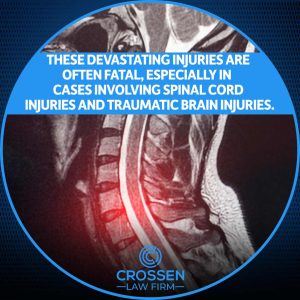 Tragically, these devastating injuries are often fatal, especially in catastrophic injury cases involving spinal cord injuries and traumatic brain injuries.
If you’ve lost a loved one due to someone else’s negligence, you can file a wrongful death claim. Technically, only the personal representative of the deceased victim’s estate can file a wrongful death claim, but the recovered damages from the claim compensate the victim’s family members.
In addition to handling personal injury cases, the Indianapolis catastrophic injury attorneys at Crossen Law Firm can assist you through the wrongful death legal process.
How Do Catastrophic Injuries Occur?
Catastrophic injuries result from many different types of accidents. Additionally, someone who deliberately causes harm may bring about catastrophic injuries.
Common sources of catastrophic injuries include:
Vehicular Accidents: A car accident can easily cause a victim to suffer from catastrophic injuries. The sheer weight and force of two vehicles colliding can cause devastating harm, including brain injuries, spinal injuries, and other types of catastrophic injuries.
Workplace Accidents: Millions of Americans work in potentially hazardous work environments, such as construction and manufacturing workers. A single mistake from a negligent employee can cause a worker to suffer tremendous harm, such as a crush injury or severe burn.
Slip and Fall Accidents: While common, a trip or slip and fall can cause a victim to suffer severe trauma. If you suffered a catastrophic injury from a slip and fall due to a property owner’s negligence, you have the right to seek compensation.
Defective Products: A malfunctioning product can cause serious harm, especially if the product is part of a vehicle, tool, or electrical appliance. Fortunately, an injured party does have the right to file a catastrophic injury claim or lawsuit against a negligent designer, manufacturer, distributor, or another party that caused harm.
Medical Malpractice: When an injured or sick individual seeks medical treatment, they expect to be able to trust their medical provider’s discretion. Sadly, even medical professionals can make costly, avoidable mistakes that ultimately cause life-changing harm. The sad reality is that proving catastrophic injury cases involving medical malpractice can be tremendously difficult, so it’s critical to hire a catastrophic personal injury attorney to assist you.
If you experience one of these events or another type of accident, you should seek emergency treatment. Delaying treatment can have severe or even fatal consequences, and seeking immediate treatment will also help you prove your personal injury claim.
How Is Fault Determined After a Catastrophic Injury?
If you were severely injured from another party’s negligence or deliberate wrongdoing, you can file a catastrophic injury lawsuit or claim to recoup compensation. That said, you’ll need to be able to prove that they were at fault for your catastrophic injuries.
Firstly, you must provide sufficient evidence that the negligent party was at fault for the accident. Once again, the negligent party’s insurance company will likely attempt to mitigate or outright deny liability, so they will argue against your claim.
Victims can strengthen their catastrophic injury cases with the following evidence:
- Photos and videos of the accident and its aftermath, including smartphone and surveillance footage.

- Eyewitness testimony
- Accident reports, including police and work incident reports
- Accident reconstruction experts
- Product or equipment logs in defective product cases
- Medical expert testimony in malpractice cases

You’ll also need to be able to prove that you suffered damages as a direct of the negligent party’s actions or inaction.
The evidence you’ll need to collect will depend on what damages you seek, but, generally, you should preserve the following:
- Medical records and doctor’s notes
- All bills related to your injuries
- Vehicle repair estimates if applicable
- Employment records corroborating your lost wages
- Testimony from family and friends regarding how the catastrophic injury impacted you mentally and emotionally
- Medical expert testimony corroborating the severity of your injuries and loss of future earnings
Catastrophic Injury Compensation You Can Receive
The compensation you can recover for a catastrophic injury will directly depend on your damages. In personal injury law, there are three main types of damages: economic damages, non-economic damages, and punitive damages.
Economic damages are intended to compensate victims for financial losses, such as:
- Past and future medical bills resulting from the accident
- Medical equipment and home modifications due to a new disability
- Lost wages
- Loss of future earnings
- Property damage
Non-economic damages compensate victims for physical pain as well as mental and emotional damages.
These damages are often referred to as pain and suffering. A person who suffered a catastrophic injury has a high likelihood of developing anxiety, depression, and even post-traumatic stress disorder from the traumatic events that caused the injury. Pain and suffering damages pay victims for these non-monetary losses.
Wrongful death damages can also fall under these aforementioned categories.
Common types of wrongful death damages include:
- Funeral and burial costs
- Loss of financial support
- Loss of a parent
- Loss of consortium
- Medical expenses
- Pain and suffering
Finally, punitive damages are intended to punish a party for committing especially repugnant actions that ultimately caused severe injuries or deaths. Although these damages are meant to punish the at-fault party for their egregious actions, the damages are rewarded to the victim. The award of these damages is incredibly rare, but those filing personal injury lawsuits can discuss this prospect with catastrophic injuries lawyers in Indianapolis.
Are There Damage Caps on a Catastrophic Injury Claim?
There are no damage caps in Indiana when seeking economic and non-economic damages. This is great news for catastrophic injury victims because these afflictions are often incredibly costly. Indianapolis catastrophic injury lawyers pursue maximum compensation for their clients, and there is no limit to the amount of damages you can recover.
The only exception to this is punitive damages. In cases involving the award of these damages, the amount cannot be three times the amount of compensation you receive in economic damages. For instance, if you’re awarded $10,000 in economic damages, your damage amount cannot surpass $30,000.
Contact a Catastrophic Injury Lawyer in Indianapolis Today
 If you’ve suffered from a catastrophic injury, don’t wait to begin the claims process. You only have two years from the date of the accident to file your claim. It often takes a great deal of time and effort to build these cases, so it’s best to seek legal representation as soon as possible.
For experienced legal support you can trust, contact catastrophic injuries lawyers in Indianapolis at Crossen Law Firm. We’ve successfully recovered millions for our clients, and we may be able to help you recover the money you deserve.
You can request a free consultation today by calling 463-218-6596. You can also discuss your case with one of our experienced Indianapolis catastrophic injury lawyers by filling out our form.
Frequently Asked Questions
What does catastrophic mean medically?
In the context of Indiana law, a catastrophic injury is legally defined as a bodily injury so severe that the victim’s ability to live independently is significantly impaired for a period of at least one year. This legal standard specifically includes injuries that cause blindness, deafness, paralysis, or an intellectual disability, reflecting a permanent or long-term deviation from the person’s pre-injury life.
Can you survive a catastrophic injury?
Yes, many individuals survive catastrophic injuries, but survival is often accompanied by a lifetime of permanent physical or cognitive limitations. While emergency treatment saves lives, survivors frequently require long-term needs that include extensive medical care, specialized rehabilitation, assistive devices, and ongoing support for chronic pain or emotional distress.
What injuries never fully heal?
The most common injuries that may never fully heal are those involving damage to the central nervous system, such as severe spinal cord injuries and traumatic brain injuries. Other conditions resulting in permanent impairment, such as amputation, extensive third-degree burns, and chronic wounds in individuals with circulatory issues, also typically result in lifelong challenges and the inability to regain full pre-injury function.
What injuries are hard to prove?
Injuries that are hard to prove are generally those that lack objective, quantifiable evidence like standard medical imaging from X-rays or basic scans. These frequently include soft tissue injuries such as whiplash, as well as complex conditions like chronic pain syndrome, fibromyalgia, or post-traumatic stress disorder (PTSD), which rely heavily on the victim’s subjective testimony and extensive psychological documentation.
What injury can doctors not prove?
Doctors cannot objectively prove the subjective experience of chronic pain, which is an individual’s report of discomfort that cannot be precisely measured or confirmed with a single diagnostic test. While advanced imaging or nerve studies can show underlying damage, the specific level of debilitating pain and the resulting emotional distress are inherently non-physical experiences that must be corroborated by expert testimony and detailed patient records.

-
“Trevor was courteous, professional, fair, and an excellent communicator throughout our entire interaction! Would highly recommend.”
- Hussain -
“What a relief it was that we had someone like Trevor Crossen on our side. Everyone in the office were very pleasant and helpful. We would have been lost if not for him. This is a group that you need to be there when you have to fight for what is right. Automobile accidents are hard enough on you without having to have someone see you through all the paperwork and legal issues. There is no one else I would trust to take us through than Crossen Law Firm they are the best!”
- Bob Taylor -
“Mr. Trevor Crossen has been sìuch a blessing. I was so lost when we first met. He took great care to make sure that I was treated with dignity, he walked me through the whole process from beginning to the end. I had no idea what to expect but he took the time to explain everything and made sure I was treated the way I should be. I would highly recommend Trevor to anyone. The others in the office were so kind and helpful. If you want someone truly on your side Trevor Crossen is the man you need. Thank you all for being there for me.”
- Denise Taylor -
“I honestly don’t know where to start! Trevor is an exceptionable person, he honestly cares for those he works with and his clients! He has completely changed my mind of how lawyers act! He is a man of integrity and I, especially today on thanksgiving, am thankful I chose his law firm to represent me! I highly recommend that you choose Crossen law firm!! Thank you Trevor for all that you’ve done for me and continue to do!”
- Ben Steiner -
“Trevor and His Team Were a "True Guiding Light" for MY Family & I During a Very Difficult and Emotional Time in Our Lives! Thank You Team Crossen”
- Joe A

Why Crossen Law Firm?

Call our office today at (317) 939-6800 to discuss your case.